Custimoo
Redesigning an internal supply chain platform for a white-label sportswear manufacturer. Reducing fragmentation, improving operational visibility, and designing for how teams actually work.
Overview
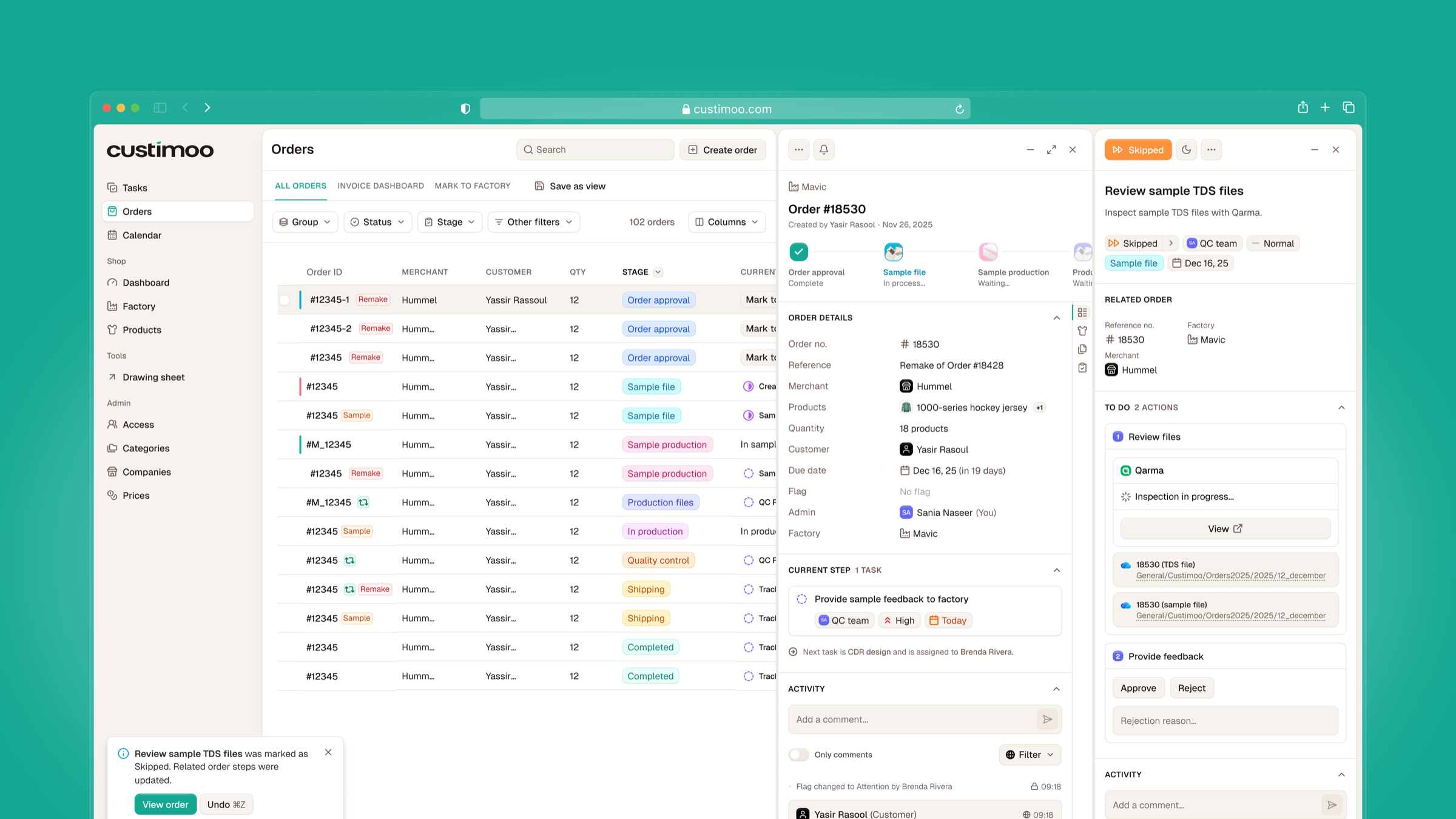
Custimoo is a white-label sportswear platform that connects a product customiser with a complex internal supply chain system used to manage production, orders, and delivery workflows.
We worked on the internal operational platform used by order administrators, designers, and production teams, as well as conducting a UX audit of the product customiser. The main challenge was to reduce fragmentation across tools and improve visibility, control, and efficiency in daily operations.
Problem
A lot of manual steps, nothing connected
The internal supply chain relied on multiple disconnected tools and manual processes to manage orders across production stages. This created high context switching between tools, a lack of visibility on order progress, and cognitive overload for daily operations.
The result: increased risk of manual errors and difficulty prioritising active work. The objective was not only to improve usability, but to redesign how operational work was structured across the organisation.
Process
Designing for how people actually work
Story 1Designing for multitasking
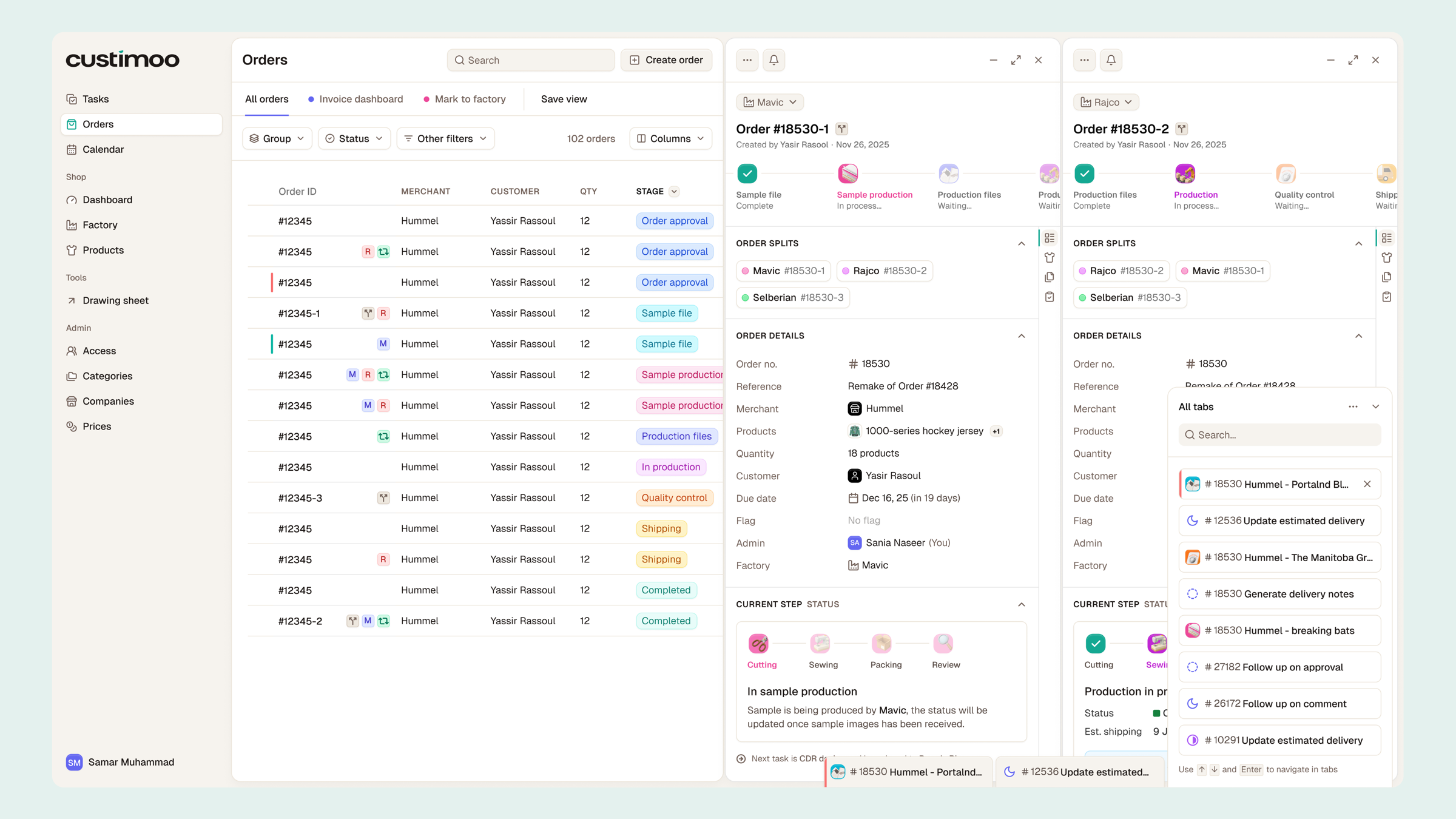
During a shadowing session, we watched an order administrator open and close the same order four times in twenty minutes. Not out of confusion, but because she was managing five orders at once. The interface was built for sequential tasks. The actual work was parallel.
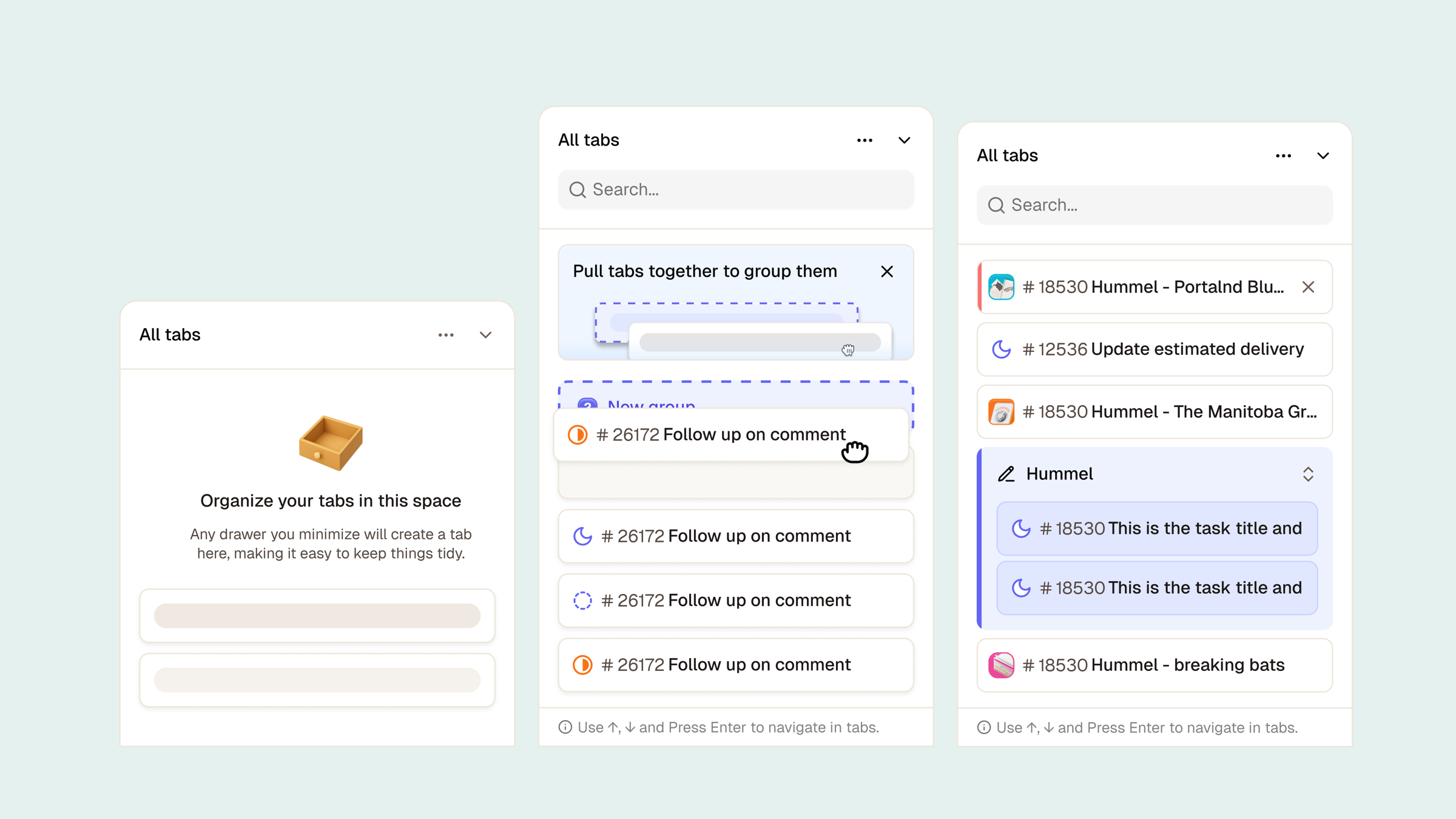
We redesigned the workspace as a multi-column layout, keeping several orders visible simultaneously. During testing, administrators said it was the first time the tool reflected how they actually worked.
01
Shadowing
5 orders open at once. No single place to see everything.
02
Finding
The tool expected one task at a time. The work never was.
03
Concept
Multiple orders visible at once, easy to compare without switching.
04
Validation
Tested with the team on real orders. It worked.
Story 2Role-based operational clarity
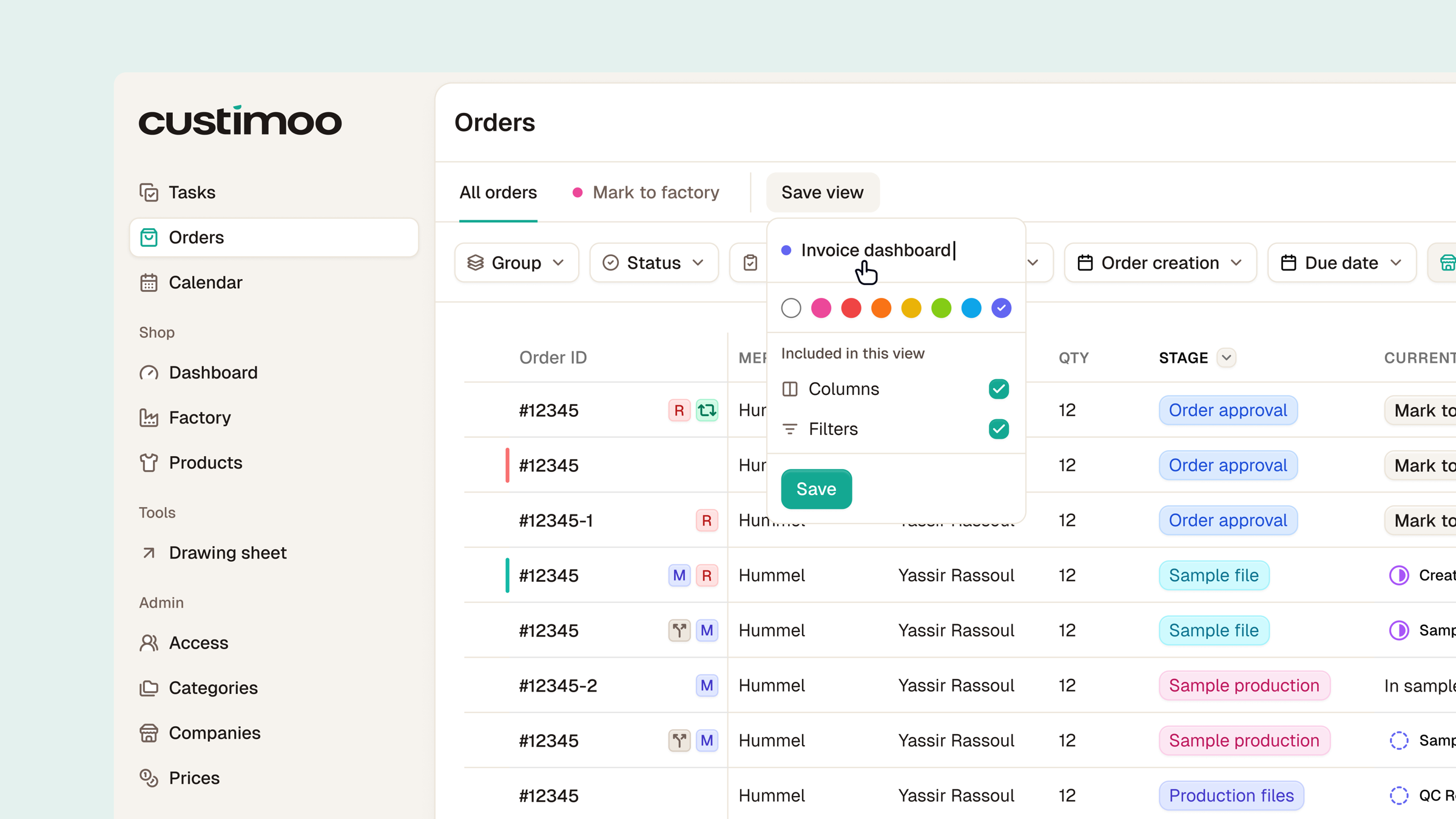
Order administrators, designers and production teams all used the same platform, but they needed completely different information to do their jobs. The interface treated them as one user. Everyone spent time filtering out what wasn't relevant to them.
We introduced role-based views tailored to each team's daily responsibilities. Not a cosmetic change. A structural one. The right information, visible to the right person, at the right moment.
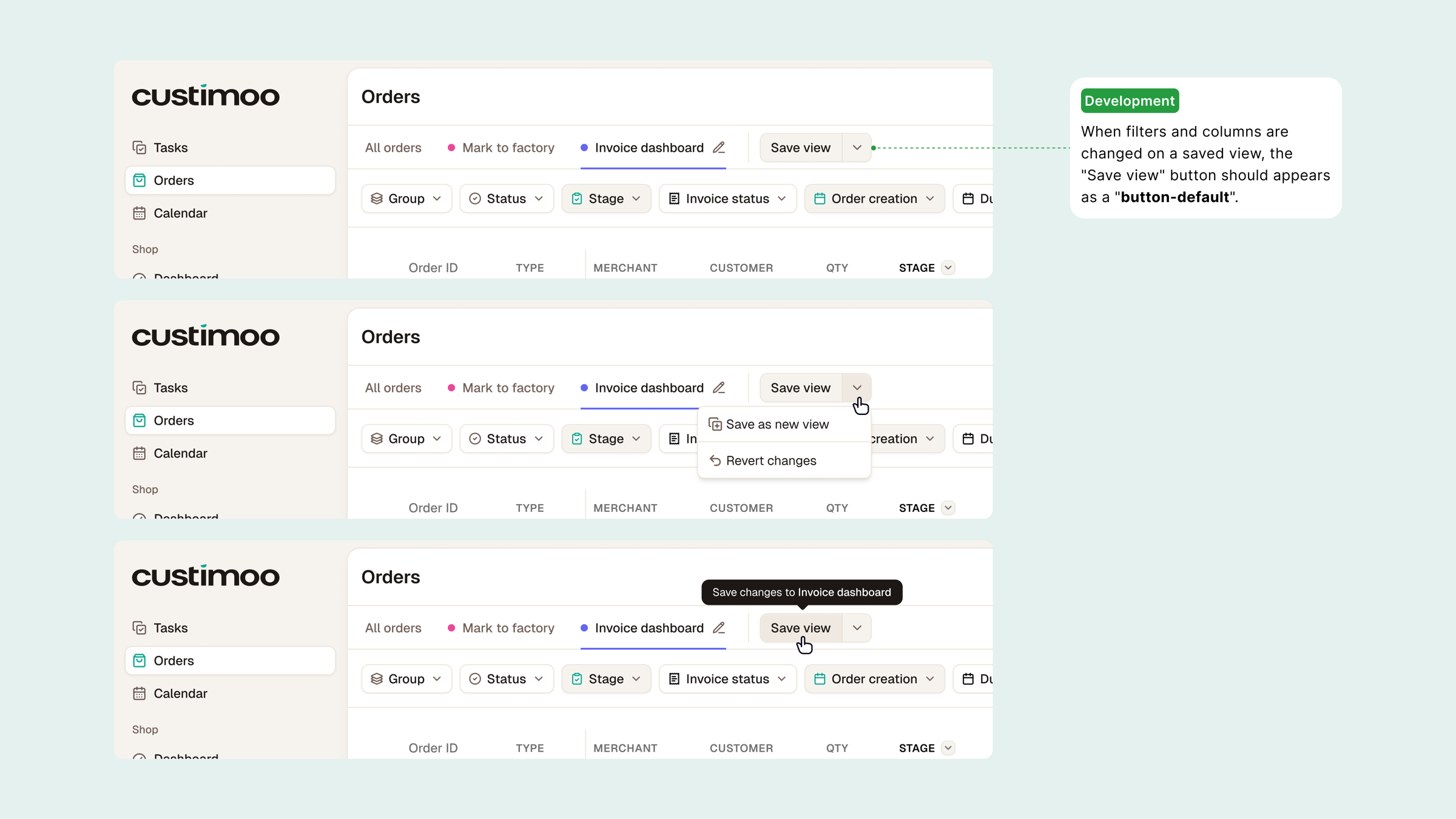
Story 3From fragmented tools to one operational system
The supply chain didn't have a tool problem. It had a system problem. Orders moved through production stages across multiple platforms, with manual handoffs and constant cross-checking between tools.
Consolidating key workflows into a single platform wasn't just about reducing clicks. It was about giving the operations team a shared source of truth. One place where order status, production progress and team coordination could coexist.
Outcome
"I can finally keep track of everything without switching between different tools all the time."
User testing confirmed improvements across operational workflows. Order administrators reported a clearer and more structured experience when managing daily operations, with improved visibility across active orders.
The redesigned workspace reduced the need to constantly switch between tools and improved overall workflow continuity.